Blog

  • How to Hire a Home Repair Contractor: 8 Checks Before You Sign

    How to Hire a Home Repair Contractor: 8 Checks Before You Sign

    Short answer: Before you hire anyone, confirm their license with your state or local licensing office, get a certificate of insurance, compare at least two written estimates, and sign a written contract that spells out the scope, price, schedule, permits and payment schedule. Avoid paying most of the price before the work starts.

    8 checks before you sign

    1. License. Look the contractor up with your state or local licensing board. Requirements differ by state and trade, and electricians and plumbers are licensed almost everywhere.
    2. Insurance. Ask for a certificate of liability insurance and workers’ compensation coverage, issued by their insurer, not a photo of a card.
    3. Written estimates. Get at least two, itemized the same way, so you can compare materials, labor and extras line by line.
    4. Written contract. It should name the scope of work, materials, start and finish dates, total price, payment schedule, cleanup and warranty.
    5. Permits. Ask who pulls the permit. Work done without a required permit can cause problems with insurance and when you sell.
    6. Payment schedule. Tie payments to finished stages of work. Be wary of anyone who asks for most of the money upfront or cash only.
    7. References and reviews. Ask for recent customers with similar jobs, and look at reviews on more than one site.
    8. Change orders. Agree that any change to the scope or price is put in writing and signed before the work is done.

    Red flags

    • Door-to-door offers right after a storm, with pressure to sign that day
    • No physical business address or a phone number that only takes texts
    • Pressure to sign an insurance assignment of benefits before you have talked to your insurer
    • A price far below the other estimates with no explanation
    • Refusal to put anything in writing

    After the job

    • Walk through the work with the contractor before the final payment.
    • Get warranty documents, permit sign-offs and receipts for materials.
    • Keep photos from before, during and after the job with your house records.

    Frequently asked questions

    Do I need a licensed contractor for small repairs?

    It depends on your state and the type of work. Electrical, plumbing, gas and structural work almost always require a licensed professional, and many states also license general and roofing contractors above a certain job size.

    Who is responsible for checking a contractor’s license?

    You are. Home Repair Explained connects homeowners with independent providers but does not license or vet them, so always verify the license and insurance yourself before work begins.
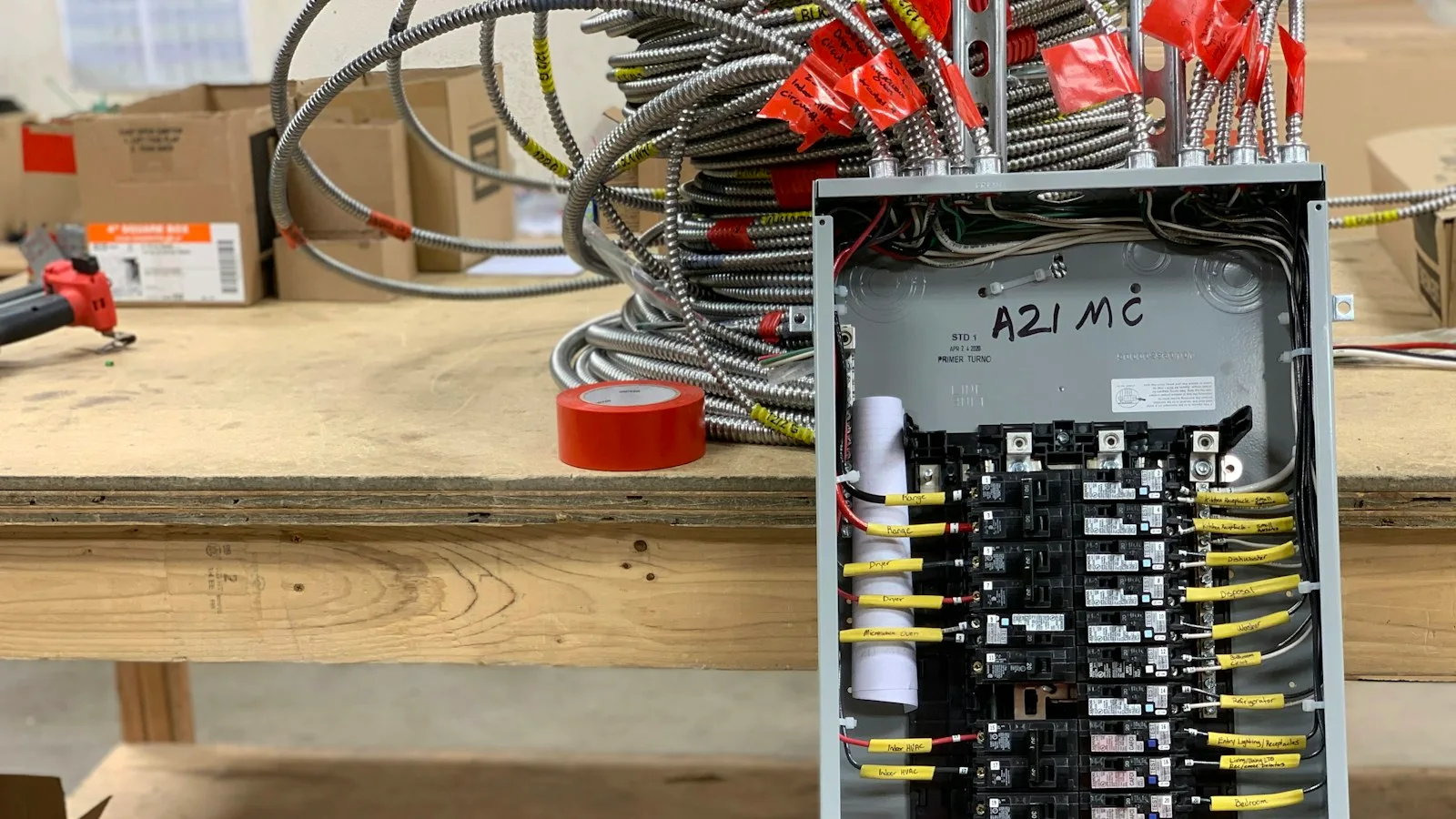

  • Breaker Keeps Tripping? What It Means and When to Call an Electrician

    Breaker Keeps Tripping? What It Means and When to Call an Electrician

    Short answer: A breaker that trips when several devices run is usually an overloaded circuit, which you can fix by spreading the load. A breaker that trips the moment you reset it points to a short circuit or ground fault: leave it off and call a licensed electrician. A burning smell, scorch marks or a warm panel are reasons to call right away.

    What the pattern tells you

    When it tripsMost likely causeWhat to do
    When several appliances run at onceOverloaded circuitUnplug some devices and move high-draw appliances to another circuit
    Only when one appliance is usedFaulty appliance or cordStop using it and have it repaired or replaced
    Immediately on reset, with nothing onShort circuit or ground faultLeave the breaker off and call an electrician
    In wet weather, or on kitchen, bath or outdoor circuitsGround fault, often from moistureLeave it off and have an electrician find the fault
    Randomly, or the breaker is warm or buzzingLoose connection or failing breakerCall an electrician

    Talk to a local pro

    Need a licensed electrician?

    Call to be connected with an independent licensed electrician that serves your area. Calls are answered by the provider or their scheduling team.

    For homeowners who need new service. Have ready: your address and a short description of the problem. If you smell burning or see sparks, call 911 first.

    What you can safely check

    1. Turn off and unplug everything on the circuit.
    2. Reset the breaker once: push it fully to Off, then back to On.
    3. Plug items back in one at a time, starting with low-power devices, and note what trips it.
    4. If a GFCI outlet in a bathroom, kitchen, garage or outdoors has popped, press its Reset button.

    Do not keep resetting a breaker that trips again. Repeated trips mean something is wrong, and resetting it over and over can let wiring overheat.

    Call an electrician right away if

    • You smell burning or see scorch marks on an outlet, a switch or the panel.
    • An outlet or switch plate feels warm.
    • You hear buzzing or crackling from the panel.
    • The breaker trips immediately with nothing plugged in.
    • Water has reached outlets, wiring or the panel.

    If you see smoke or flames, leave the house and call 911. Never remove the panel cover or touch wiring yourself; a licensed electrician has the tools to test circuits safely.

    Frequently asked questions

    Can a breaker go bad?

    Yes. Breakers wear out, especially in older panels. A breaker that trips under light load, feels hot or will not stay reset should be tested and replaced by an electrician.

    Is a tripping breaker dangerous?

    The breaker is doing its job by cutting power. The danger is the cause behind it, such as overheating wiring or a short, which is why repeated trips need a diagnosis.

    Sources

  • Signs of Mice in the House and What to Do About Them

    Signs of Mice in the House and What to Do About Them

    Short answer: The most common signs are droppings near food, in drawers and under sinks, chewed food packaging, and nests of shredded paper or fabric. The CDC’s approach is to seal up entry points, trap the mice, and clean up droppings safely with disinfectant instead of sweeping or vacuuming.

    Signs of mice

    • Droppings around food packages, in drawers or cupboards and under the sink
    • Nesting material such as shredded paper, fabric or dried plants
    • Chew marks on food packaging, wood or wiring
    • Scratching or scurrying sounds in walls or ceilings at night
    • Greasy rub marks along walls and baseboards where they travel

    Droppings alone do not prove mice are still there. The CDC suggests cleaning the area safely and checking again: new droppings after cleaning mean the problem is active.

    Step 1: Seal up

    Mice can squeeze through holes as small as about 1/4 inch, so check the outside of the house for gaps around pipes, vents, doors, the foundation and the garage. Fill small holes with steel wool and caulk, and cover larger gaps with metal flashing, cement or hardware cloth.

    Step 2: Trap up

    • Set snap traps along walls where you see droppings, baited with a small amount of peanut butter.
    • Check traps daily, and keep trapping for at least a week after the last catch.
    • Keep baits and poisons away from children and pets; rodenticides also put pets and wildlife at risk.

    Step 3: Clean up safely

    1. Air the area out for at least 30 minutes before you start.
    2. Put on rubber or plastic gloves.
    3. Spray droppings and nesting material with disinfectant or a mix of 1 part bleach to 10 parts water, and let it soak for 5 minutes.
    4. Wipe it up with paper towels and bag the waste.
    5. Do not sweep or vacuum droppings, which can stir contaminated dust into the air.
    6. Disinfect the surfaces, wash your gloved hands, remove the gloves, then wash your hands again.

    Talk to a local pro

    Seeing signs of pests in your home?

    Call to be connected with an independent pest control company that serves your area. Calls are answered by the provider or their scheduling team.

    For homeowners who need new service. Have ready: your address, what you have seen and where, and whether you rent or own the home.

    When to call a pest control company

    • You keep finding new droppings after two weeks of trapping.
    • You hear activity in several walls or in the attic.
    • You cannot find or reach the entry points.
    • Someone in the home has asthma or a weakened immune system and should stay away from droppings.
    • You suspect rats rather than mice; rats avoid new objects and are harder to trap.

    Frequently asked questions

    Do mice go away on their own?

    Rarely. As long as food, water and shelter are available, they stay and breed, which is why sealing entry points matters as much as trapping.

    Are mouse droppings dangerous?

    They can carry germs, including hantavirus in some areas, which is why the CDC advises wetting droppings with disinfectant instead of sweeping or vacuuming them.

    Sources

  • Tree Removal Cost: What You Will Pay by Tree Size and Type

    Tree Removal Cost: What You Will Pay by Tree Size and Type

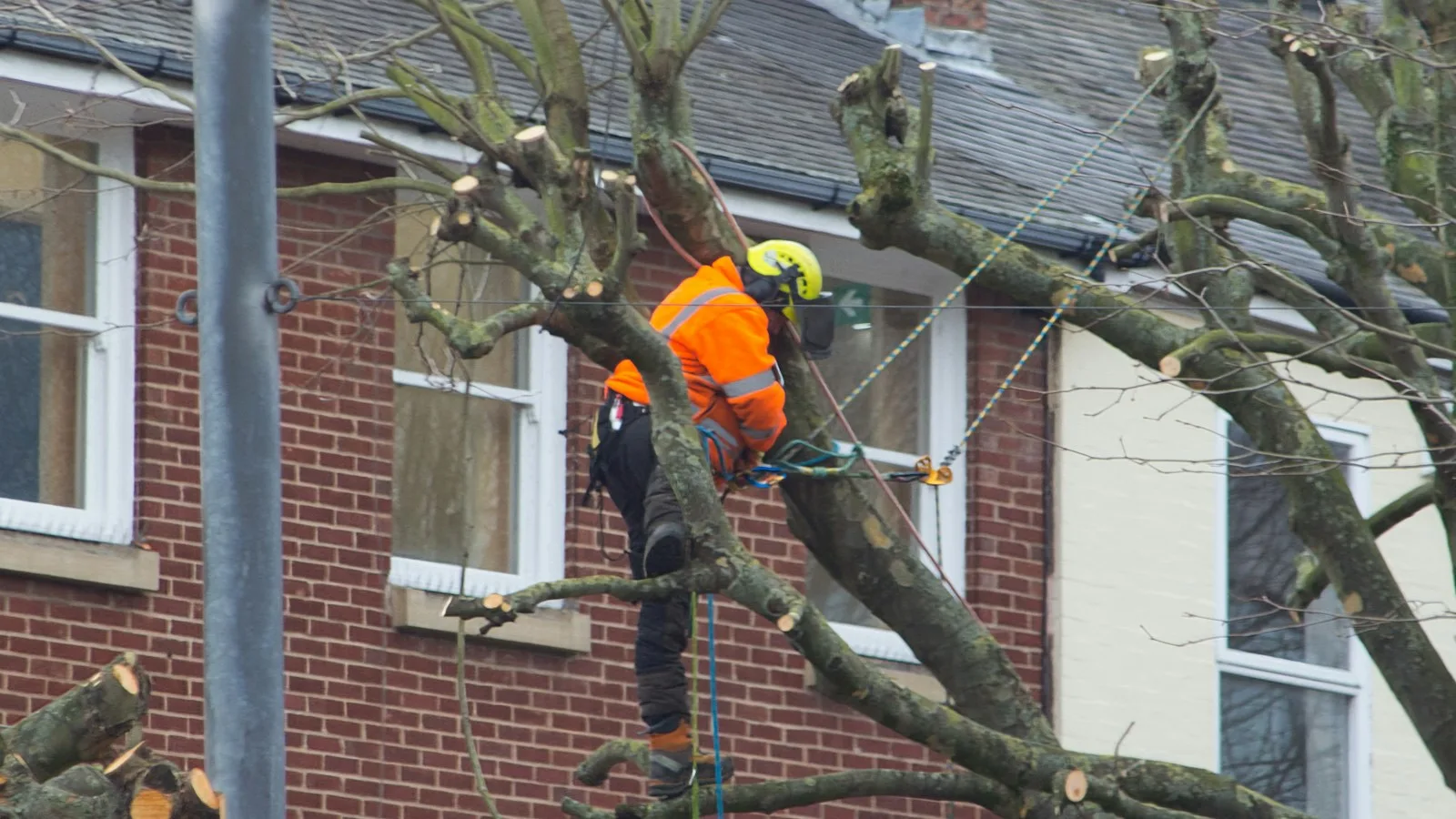
    Short answer: Most homeowners pay $385 to $1,070 to have a tree removed, about $850 on average, according to LawnLove’s 2026 cost guide. Many companies price by height, at roughly $9.50 to $14.50 per foot. Large trees near the house or power lines, emergency work and stump grinding add to the cost.

    Tree removal cost at a glance

    ItemTypical cost
    National averageabout $850
    Typical range$385 to $1,070
    Per foot of height$9.50 to $14.50
    Stump removal (extra)$180 to $525
    Tree trimming, for comparisonabout $420 on average
    Source: LawnLove 2026 cost guide. This Old House puts the average removal at $906.

    Cost by tree type

    Tree typeTypical mature heightTypical removal cost
    Palm30 to 50 ft$310 to $475
    Oak40 to 80 ft$380 to $1,160
    Ash50 to 80 ft$475 to $1,160
    Pine50 to 100 ft$475 to $1,450
    Maple60 to 90 ft$570 to $1,305
    Source: LawnLove 2026 cost guide.

    Talk to a local pro

    Need a tree removed or checked?

    Call to be connected with an independent tree service that serves your area. Calls are answered by the provider or their scheduling team.

    For homeowners who need new service. Have ready: your address, the rough height of the tree, and whether it is near the house or power lines.

    What raises the price

    • Height and trunk size. Taller, wider trees take more climbing, rigging and hauling.
    • Location. A tree over the house, a fence or power lines must come down in pieces, sometimes with a crane.
    • Condition. Dead or storm-damaged trees can break unpredictably, which adds risk and time.
    • Emergency work. A tree on the roof after a storm costs more than a scheduled removal.
    • Extras. Stump grinding, root removal, wood hauling and permits are often priced separately.

    Signs a tree should come down

    • Large dead branches or a dead top
    • Deep cracks, cavities or fungus at the base
    • A new lean, or soil heaving on one side of the trunk
    • Roots damaging the foundation, driveway or sewer line
    • Branches touching power lines (call your utility; never trim near lines yourself)

    How to hire a tree service

    1. Get two or three written quotes that list what is included: felling, hauling, stump grinding and cleanup.
    2. Ask for proof of liability insurance and workers’ compensation before anyone climbs.
    3. Look for an ISA Certified Arborist when the question is whether a tree can be saved.
    4. Check whether your town requires a permit to remove trees above a certain size.

    Frequently asked questions

    Is stump removal included?

    Usually not. LawnLove puts stump removal at $180 to $525 on top of the removal price, so ask for it on the quote.

    Does homeowners insurance pay for tree removal?

    Often only when a tree falls on a covered structure, such as the house or a fence, during a covered event. Removing a healthy or dying tree as a precaution is usually your cost.

    Sources

  • Gutters Overflowing in Heavy Rain: Causes and Fixes

    Gutters Overflowing in Heavy Rain: Causes and Fixes

    Short answer: Overflowing gutters are usually clogged with leaves and grit, missing a downspout where water collects, sloped the wrong way, or too small for the roof area that drains into them. Clean them and test with a hose first; if they still overflow in heavy storms, ask a gutter contractor about larger gutters, extra downspouts or re-hanging them.

    Why overflowing gutters matter

    Gutters move roof water away from the house. When they spill over, water lands next to the foundation, splashes the siding, rots fascia boards and can back up under the roof edge. Over time that can mean basement leaks, wood rot and ceiling stains.

    Causes and fixes

    CauseHow to spot itFix
    Clogged gutter or downspoutDebris or plants in the gutter; water shoots over the front edgeClean the gutters and flush the downspouts; consider guards
    Wrong slopeStanding water in one section after rainRe-hang the gutter so it slopes toward the downspout
    Too few downspoutsOverflow midway along long runsAdd a downspout
    Gutter too smallOverflows only in heavy rain, even when cleanUpgrade to larger gutters or downspouts
    Water overshooting at a roof valleyOverflow at inside cornersAdd a splash guard or valley diverter
    Loose or sagging hangersGutter pulling away from the fasciaRe-fasten or replace the hangers

    How to test your gutters

    1. Clean out the gutters, working from a stable ladder with someone holding it.
    2. Run a garden hose at the far end of each run and watch where the water goes.
    3. Look for standing water, leaking seams, and water that is slow to reach the downspout. A common rule of thumb is a slope of about 1/4 inch toward the downspout for every 10 feet of gutter.
    4. Make sure every downspout empties several feet from the foundation, using extensions or splash blocks.

    Talk to a local pro

    Thinking about a new roof, gutters or siding?

    Call to be connected with an independent roofing or exterior contractor that serves your area. Calls are answered by the provider or their scheduling team.

    For homeowners who need new service. Have ready: your address, the type of roof or siding you have now, and photos of any damage.

    When to replace gutters

    • Seams leak in several places even after resealing.
    • Sections sag or pull away from the house again and again.
    • Rust, cracks or holes run along the length.
    • The gutters overflow in every heavy storm because they are too small for the roof.
    • The fascia boards behind them are rotting and need replacing anyway.

    Frequently asked questions

    How often should gutters be cleaned?

    For most homes, at least once or twice a year, usually in late spring and late fall, and more often under trees that shed heavily.

    Do gutter guards stop overflowing?

    They reduce clogs from leaves, but they do not fix gutters that are too small, sloped wrong or short on downspouts, and they still need occasional cleaning.

  • Brown Stain on the Ceiling After Rain: Roof Leak or Something Else?

    Brown Stain on the Ceiling After Rain: Roof Leak or Something Else?

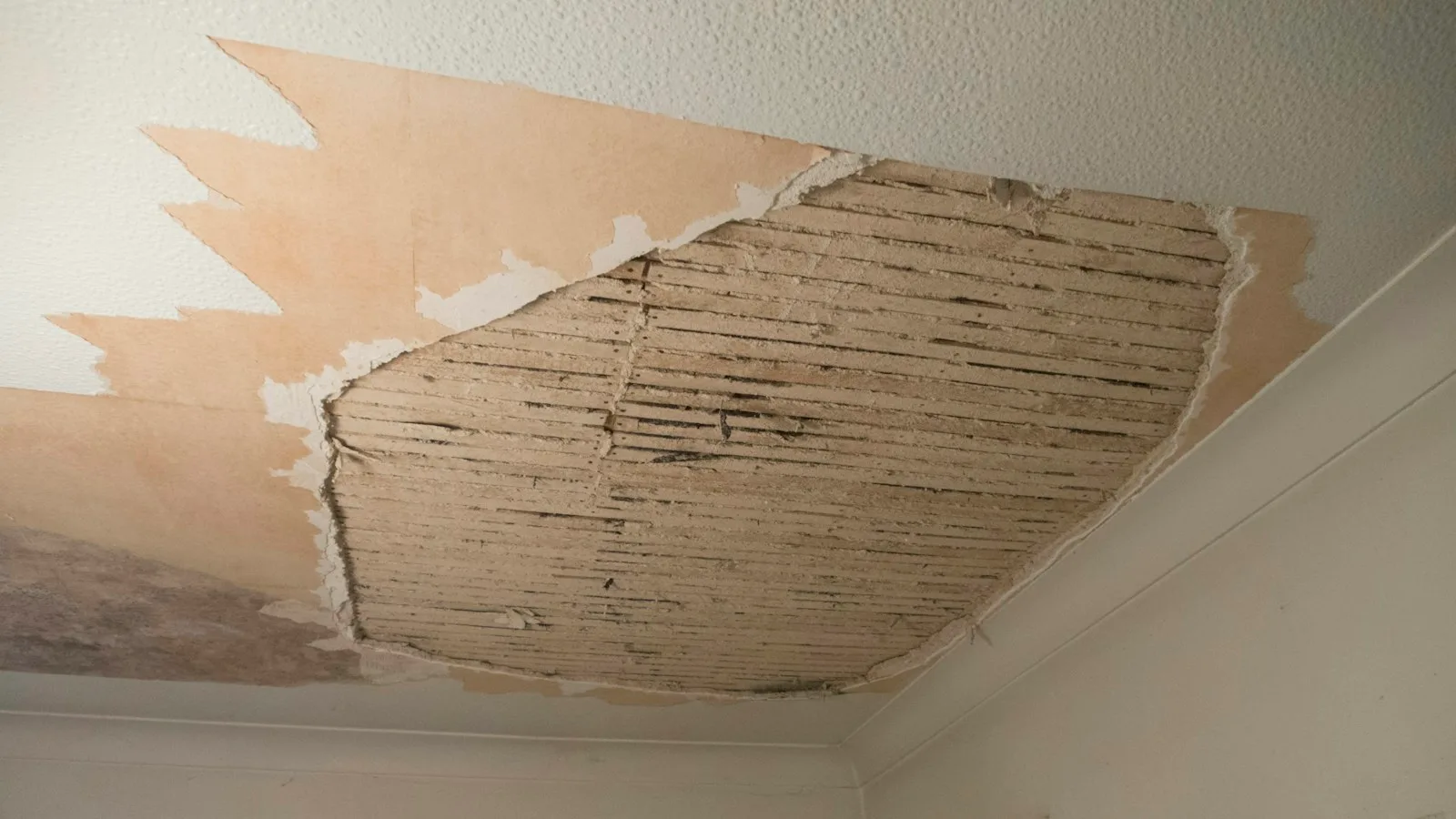
    Short answer: If a ceiling stain appears or grows after rain, the roof is the most likely source, often at flashing, vents, chimneys or valleys. If it grows in dry weather, look at plumbing above the ceiling, such as a bathroom, or at condensation from ducts or an attic air handler. Find the source before you paint.

    How to tell where the water is coming from

    ClueLikely source
    Stain appears or spreads after rain or snowmeltRoof, flashing, skylight or chimney
    Stain under a bathroom, toilet or tubPlumbing leak or failed seal
    Stain near an AC vent or below an attic air handler, worse in summerCondensation or a clogged condensate drain
    Stain along an exterior wall after wind-driven rainSiding, window flashing or overflowing gutters
    Stain near the roof edge in winterIce dam pushing water under the shingles

    What to do right now

    1. Put a bucket under any drip. If the ceiling is bulging with water, poke a small hole in the center of the bulge so it drains into the bucket, which relieves pressure on the drywall.
    2. Move furniture and electronics away, and switch off any light or fan on that ceiling if water is near the fixture.
    3. Photograph the stain and, if it is safe, the attic above it during or right after rain.
    4. Check the attic with a flashlight for wet insulation, dark streaks on the roof decking, or daylight around vents and the chimney.
    5. Dry the area. The EPA advises drying wet materials within 24 to 48 hours to prevent mold.

    Talk to a local pro

    Thinking about a new roof, gutters or siding?

    Call to be connected with an independent roofing or exterior contractor that serves your area. Calls are answered by the provider or their scheduling team.

    For homeowners who need new service. Have ready: your address, the type of roof or siding you have now, and photos of any damage.

    Common roof leak spots

    • Flashing around chimneys, skylights and walls
    • Plumbing vent boots, whose rubber collars crack with age
    • Valleys, where two roof slopes meet
    • Missing, cracked or lifted shingles after wind
    • Clogged gutters that back water up under the roof edge; see gutters overflowing

    Can you just paint over the stain?

    Not until the leak is fixed and the drywall is completely dry. The EPA advises against painting or caulking over damp or moldy surfaces. Once the source is repaired, a stain-blocking primer keeps the mark from bleeding through the new paint. Drywall that sags or feels soft should be replaced.

    Frequently asked questions

    Is a small ceiling stain an emergency?

    Usually not, but it is a warning. Small leaks rot decking and insulation and can lead to mold, so have the source found within days, not months.

    Who should I call about a ceiling stain?

    A roofer if the stain grows after rain, a plumber if it sits below a bathroom or pipes, and an HVAC technician if it is near an air handler or vent.

    Sources

  • Roof Replacement Cost in 2026: Prices by Material and Size

    Roof Replacement Cost in 2026: Prices by Material and Size

    Short answer: A roof replacement costs about $9,500 on average, with most projects between $5,800 and $46,000, according to Angi data cited by NerdWallet. With typical materials, expect roughly $4 to $11 per square foot installed. Roof size, pitch, material and tear-off drive the price.

    Roof replacement cost at a glance

    ItemTypical cost
    National averageabout $9,500
    Typical range$5,800 to $46,000
    Per square foot, typical materials$4 to $11
    Asphalt shingles on a 1,700 sq ft roof$8,500 to $13,500
    Tear-off of old asphalt shingles$1 to $3 per sq ft
    Sources: NerdWallet (Angi data), Roof Observations and HomeGnome 2026 cost guides.

    Cost by material

    MaterialInstalled cost per sq ft
    Asphalt shingles$4 to $5
    Concrete tile$9 to $13
    Wood shake$9.50 to $13
    Metal$14 to $19
    Slate tile$16 to $22
    Source: HomeGnome 2026, materials and labor. Other guides put asphalt at $5.60 to $7.65 per sq ft, so get local quotes.

    Talk to a local pro

    Thinking about a new roof, gutters or siding?

    Call to be connected with an independent roofing or exterior contractor that serves your area. Calls are answered by the provider or their scheduling team.

    For homeowners who need new service. Have ready: your address, the type of roof or siding you have now, and photos of any damage.

    What drives your quote

    • Roof size. Roofers price by the square, which is 100 square feet of roof surface. Roof area is larger than your floor area because of pitch and overhangs.
    • Pitch and complexity. Steep roofs and roofs with many valleys, dormers or skylights take longer; complex designs can raise labor costs by up to 50 percent.
    • Tear-off. Removing old shingles adds about $1 to $3 per square foot, more for heavy materials like clay.
    • Decking repairs. Rotted roof sheathing found during tear-off is replaced at an extra cost, usually per sheet.
    • Permits and disposal. Many towns require a permit for a new roof, and the dumpster is part of the bill.

    Repair or replace?

    Replacement makes sense when shingles are curling, cracking or losing granules across the whole roof, when leaks keep returning in different places, or when the roof is near the end of its expected life. A few missing shingles after a storm or one leak at a flashing are usually repairs.

    How to compare roofing quotes

    1. Get at least three written quotes that name the shingle line, underlayment, flashing and ventilation.
    2. Ask whether the price includes tear-off, disposal, permits and decking replacement, and the price per sheet of decking.
    3. Check the contractor’s license and insurance in your state.
    4. Get both the manufacturer’s warranty and the contractor’s workmanship warranty in writing.
    5. If a storm damaged the roof, call your insurer before signing a contract.

    Frequently asked questions

    How long does a roof replacement take?

    Most asphalt roofs on a typical house take one to three days, weather permitting. Tile, slate and complex roofs take longer.

    Does insurance pay for a new roof?

    Usually only when a covered event, such as wind or hail, damages the roof. Insurance does not pay to replace a roof that wore out with age.

    Sources

  • AC Running but Not Cooling? 8 Causes and When to Call a Pro

    AC Running but Not Cooling? 8 Causes and When to Call a Pro

    Short answer: Start with the simple checks: the thermostat set to Cool and Auto, a clean air filter, the breaker for the outdoor unit, and a clear, clean outdoor coil. If the lines or indoor coil are icing up, every vent blows warm air, or you hear hissing, the likely cause is low refrigerant or a failing part, which needs an HVAC technician.

    Quick checks you can do safely

    1. Thermostat. Set it to Cool, the fan to Auto, and a temperature a few degrees below the room. Replace the batteries if it uses them.
    2. Air filter. A clogged filter chokes airflow. Energy.gov suggests cleaning or replacing filters every month or two during the cooling season, and more often with pets or dust.
    3. Breakers and switches. Check the breakers for the outdoor unit and the indoor air handler, and the service switch near the indoor unit.
    4. Outdoor unit. Clear leaves and trim plants back so air can flow. With the power off at the outdoor disconnect, rinse the coil gently with a garden hose.
    5. Vents, windows and doors. Make sure supply and return vents are open and unblocked, and that windows and exterior doors are closed.

    8 common causes

    CauseSignsWho fixes it
    Thermostat setting or failureFan runs but no cooling; blank displayYou (settings, batteries) or a technician
    Dirty air filterWeak airflow; dusty filterYou
    Dirty outdoor coilOutdoor unit caked with dirt; runs nonstopYou (gentle rinse) or a technician
    Frozen indoor coilIce on the copper line or coil; water near the air handlerTurn cooling off to thaw; a technician finds the cause
    Low refrigerant (a leak)Warm air, icing, hissing, long run timesA technician must find and repair the leak
    Clogged condensate drainWater near the indoor unit; system shuts offYou (clear the line) or a technician
    Failed capacitor or contactorOutdoor fan or compressor will not start; hummingA technician
    Leaky or undersized ductsSome rooms cool, others do notA technician or duct specialist

    Talk to a local pro

    AC or furnace not working right?

    Call to be connected with an independent HVAC company that serves your area. Calls are answered by the provider or their scheduling team.

    For homeowners who need new service. Have ready: your address, the brand and age of the system if you know it, and what it is doing.

    Why adding refrigerant is not a fix

    If your system is low on refrigerant, Energy.gov notes that it was either undercharged at installation or it leaks, and if it leaks, simply adding refrigerant is not a solution. A technician should find and repair the leak, then charge the system to the manufacturer’s specification.

    When to call an HVAC technician

    • You see ice on the refrigerant lines or the indoor coil.
    • The outdoor unit hums but the fan does not spin, or it will not start at all.
    • The breaker trips again after you reset it.
    • You smell burning, or hear grinding, squealing or hissing.
    • The system is old and repairs keep adding up.

    Frequently asked questions

    Should I keep running an AC that is not cooling?

    If it is icing up or making unusual noises, switch cooling off at the thermostat to protect the compressor and leave the fan on to help melt the ice. Then call a technician.

    How often should an AC be serviced?

    Energy.gov recommends regular maintenance of the filters, coils and fins, and notes that annual maintenance can improve comfort and efficiency. Most homeowners book a professional tune-up before each cooling season.

    Sources

  • Basement Flooding: What to Do First (and What Not to Do)

    Basement Flooding: What to Do First (and What Not to Do)

    Short answer: Do not step into the water until the electricity to the basement is off. Then find and stop the source, document the damage, remove the water and get the space drying within 24 to 48 hours, the EPA’s window for preventing mold. Treat sewage or outside floodwater as contaminated and call a professional.

    Step 1: Make it safe

    • If water is near outlets, cords, the furnace or the electrical panel, do not go in. Turn off power from a dry location, or call your utility or an electrician to do it.
    • If you smell gas, leave the house and call the gas company or 911 from outside.
    • Wear rubber boots and gloves. Floodwater and sewer backups can carry bacteria.

    Step 2: Find the source

    Where the water came fromCluesWhat it means
    Burst or leaking pipeWater spraying or dripping from a line; the water meter keeps movingShut off the main valve and call a plumber
    Sewer or floor drain backupDark water and odor rising from a floor drain or toiletContaminated water; use a professional
    Sump pump failurePit is full; pump not running or trippedCheck its power and float, then repair or replace it
    Groundwater or surface runoffWater seeping where the wall meets the floor during heavy rainOutside drainage or grading problem; check flood coverage
    Water heater or applianceWater pooling around the tank or washerTurn off its water supply and power

    Talk to a local pro

    Water in your home, or mold you can see?

    Call to be connected with an independent water damage and mold restoration company that serves your area. Calls are answered by the provider or their scheduling team.

    For homeowners who need new service. Have ready: your address, where the water is coming from, which rooms are affected, and your insurance company.

    Step 3: Document, then remove the water

    1. Photograph and film the water level and every damaged item before moving anything.
    2. Call your insurance company. Our guide explains what is usually covered.
    3. Pump or wet-vac standing water. For more than a few inches, a restoration company’s pumps are much faster.
    4. Move out wet rugs, cardboard boxes and furniture. Throw away soaked porous items that touched sewage.

    Step 4: Dry it within 24 to 48 hours

    The EPA advises drying water-damaged materials within 24 to 48 hours to prevent mold growth. Run dehumidifiers and fans, open windows if the outside air is drier, and pull back wet carpet. Wet drywall and insulation usually need to be cut out above the waterline so the wall cavity can dry.

    What not to do

    • Do not use a household vacuum on water.
    • Do not run the furnace or air conditioning if it got wet or if you suspect mold inside it.
    • Do not mix bleach with ammonia-based cleaners.
    • Do not paint or caulk over damp or moldy surfaces.
    • Do not pump out deep floodwater all at once while the ground outside is still saturated; ask a professional, because pressure outside the walls can damage the foundation.

    Frequently asked questions

    Who do I call for a flooded basement?

    A plumber if a pipe or water heater caused it, and a water damage restoration company to remove the water and dry the structure. For sewage, the EPA recommends a professional experienced with contaminated water.

    Why does my basement smell musty after a flood?

    A musty smell after a few days usually means materials are still wet or mold has started to grow. Moisture readings will show where.

    Sources

  • Does Homeowners Insurance Cover Water Damage? What Is and Is Not Covered

    Does Homeowners Insurance Cover Water Damage? What Is and Is Not Covered

    Short answer: Usually yes, when the damage is sudden and accidental and starts inside the home, such as a burst pipe or a failed water heater. Standard policies usually exclude flooding from outside, damage from slow leaks or poor maintenance, and sewer or drain backups unless you add a water backup endorsement.

    Water damage is one of the most common homeowners claims. According to Insurance Information Institute figures cited by Texas A&M’s Real Estate Research Center, water damage and freezing made up 29 percent of homeowners claims, with an average paid claim of $11,097 in 2021.

    What is usually covered and what is not

    SituationStandard homeowners policyHow to get coverage
    Burst or frozen pipe (sudden)Usually coveredStandard policy
    Water heater, washer or dishwasher suddenly failsUsually covered for the water damage, often not the appliance itselfStandard policy
    Rain entering through storm damage to the roofUsually coveredStandard policy
    Slow leak under a sink or behind a shower over monthsUsually not coveredFix leaks early; maintenance is the owner’s job
    Sewer or drain backupNot coveredWater or sewer backup endorsement
    Sump pump overflow or failureNot coveredWater backup endorsement
    Rising floodwater, storm surge or runoffNot coveredSeparate flood insurance (NFIP or private)
    Typical policy terms. Your policy wording decides. Sources are listed below.

    Talk to a local pro

    Water in your home, or mold you can see?

    Call to be connected with an independent water damage and mold restoration company that serves your area. Calls are answered by the provider or their scheduling team.

    For homeowners who need new service. Have ready: your address, where the water is coming from, which rooms are affected, and your insurance company.

    The two words that decide most claims: sudden and accidental

    Insurers pay for damage they see as unexpected, such as a pipe splitting in a cold snap. They usually deny damage that built up over time, such as rot from a drip under the sink, because regular maintenance could have prevented it.

    A useful shorthand from the Insurance Information Institute: water damage from the top down, such as a burst pipe or rain through a storm-damaged roof, is usually covered, while water from the bottom up, such as rising floodwater, is not.

    Water backup coverage

    Sewer and drain backups are excluded from standard policies, but most insurers sell a water or sewer backup endorsement. These endorsements typically carry limits between $5,000 and $25,000 and often cost about $50 to $250 a year, according to The Zebra.

    How to file a water damage claim

    1. Stop the water and make the area safe.
    2. Photograph and film the damage before moving or throwing anything away. Keep damaged items until the adjuster sees them or approves disposal.
    3. Call your insurer or agent and get a claim number.
    4. Prevent more damage: remove water and start drying. Keep receipts for fans, dehumidifiers and emergency services, since insurers expect you to limit the damage.
    5. Get an itemized estimate from a restoration company that includes moisture readings.
    6. Keep notes of every call: the date, the person’s name and what was said.

    Frequently asked questions

    Does homeowners insurance cover mold from water damage?

    Sometimes, if the mold came from a covered event and was cleaned up promptly. Many policies limit or exclude mold, so look for a mold sublimit in yours.

    Will a claim raise my premium?

    It can. Insurers consider claims history, so for small losses near your deductible, weigh the payout against a possible premium increase before filing.

    Do I need flood insurance if I am not in a flood zone?

    Flooding can come from melting snow, an overflowing creek or runoff down a hillside, not only from coasts and rivers. Standard policies do not cover it, so a separate flood policy is the only protection.

    Sources