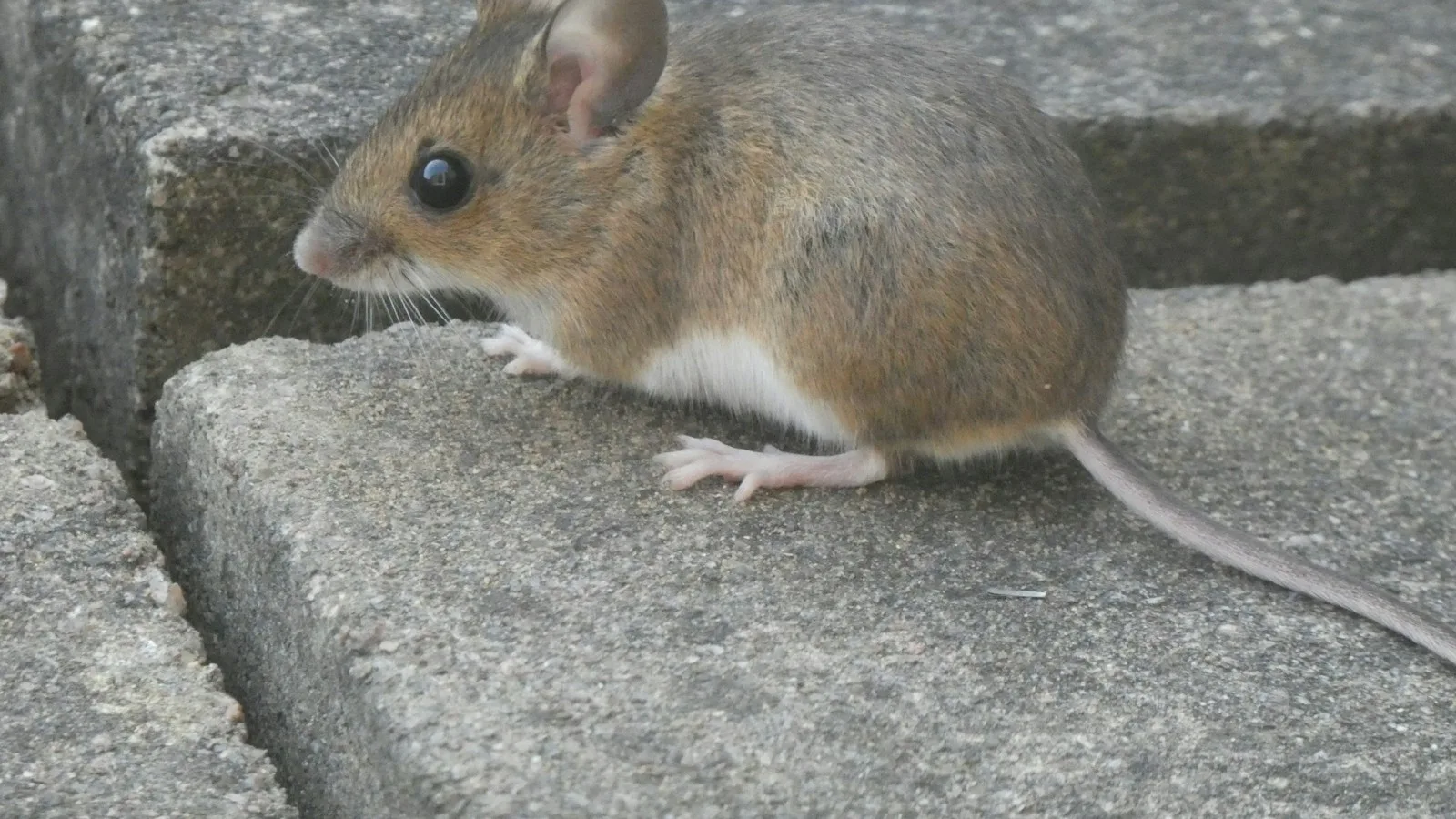
Short answer: The most common signs are droppings near food, in drawers and under sinks, chewed food packaging, and nests of shredded paper or fabric. The CDC’s approach is to seal up entry points, trap the mice, and clean up droppings safely with disinfectant instead of sweeping or vacuuming.
Signs of mice
- Droppings around food packages, in drawers or cupboards and under the sink
- Nesting material such as shredded paper, fabric or dried plants
- Chew marks on food packaging, wood or wiring
- Scratching or scurrying sounds in walls or ceilings at night
- Greasy rub marks along walls and baseboards where they travel
Droppings alone do not prove mice are still there. The CDC suggests cleaning the area safely and checking again: new droppings after cleaning mean the problem is active.
Step 1: Seal up
Mice can squeeze through holes as small as about 1/4 inch, so check the outside of the house for gaps around pipes, vents, doors, the foundation and the garage. Fill small holes with steel wool and caulk, and cover larger gaps with metal flashing, cement or hardware cloth.
Step 2: Trap up
- Set snap traps along walls where you see droppings, baited with a small amount of peanut butter.
- Check traps daily, and keep trapping for at least a week after the last catch.
- Keep baits and poisons away from children and pets; rodenticides also put pets and wildlife at risk.
Step 3: Clean up safely
- Air the area out for at least 30 minutes before you start.
- Put on rubber or plastic gloves.
- Spray droppings and nesting material with disinfectant or a mix of 1 part bleach to 10 parts water, and let it soak for 5 minutes.
- Wipe it up with paper towels and bag the waste.
- Do not sweep or vacuum droppings, which can stir contaminated dust into the air.
- Disinfect the surfaces, wash your gloved hands, remove the gloves, then wash your hands again.
Talk to a local pro
Seeing signs of pests in your home?
Call to be connected with an independent pest control company that serves your area. Calls are answered by the provider or their scheduling team.
For homeowners who need new service. Have ready: your address, what you have seen and where, and whether you rent or own the home.
When to call a pest control company
- You keep finding new droppings after two weeks of trapping.
- You hear activity in several walls or in the attic.
- You cannot find or reach the entry points.
- Someone in the home has asthma or a weakened immune system and should stay away from droppings.
- You suspect rats rather than mice; rats avoid new objects and are harder to trap.
Frequently asked questions
Do mice go away on their own?
Rarely. As long as food, water and shelter are available, they stay and breed, which is why sealing entry points matters as much as trapping.
Are mouse droppings dangerous?
They can carry germs, including hantavirus in some areas, which is why the CDC advises wetting droppings with disinfectant instead of sweeping or vacuuming them.